Introduction
Vibe coding has transformed from a niche concept in early 2025 to the Collins Dictionary Word of the Year and a mainstream software development paradigm. With 41% of all global code now AI-generated and 92% of US developers using AI coding tools daily, understanding vibe coding isn't optional for businesses in 2026 — it's essential for staying competitive.
Table of Contents
- What Is Vibe Coding?
- Definition
- Origin and Concept
- Key Principles
- How Vibe Coding Differs from Traditional Development
- Core Differences
- Role of Developers
- Speed and Workflow Comparison
- 2026 Vibe Coding Market Statistics
- Key Statistics
- Industry Adoption Milestones
- Enterprise Adoption Note
- Pros and Cons of Vibe Coding for Business
- Pros of Vibe Coding
- Cons of Vibe Coding
- The “Vibe Coding Hangover”
- Risk Mitigation Strategies
- Top Vibe Coding Tools in 2026
- Cursor
- Windsurf
- Replit Agent
- Claude Code
- Tool Comparison Matrix
- How IT Companies Help Businesses Leverage Vibe Coding
- Strategic Assessment & Readiness
- Tool Selection & Integration
- Governance & Quality Frameworks
- Team Upskilling & Change Management
- Hybrid Development Models
- Technical Debt Prevention
- Vibe Coding Implementation Roadmap
- Step 1: Start with Internal Tools
- Step 2: Establish Governance Framework
- Step 3: Train Your Team
- Step 4: Pilot Customer-Facing Project
- Step 5: Scale & Optimize
- The Future of Vibe Coding: 2026 and Beyond
- Self-Healing Software
- Agentic Development
- The Expanding Role of Developers
- 2026 Predictions
- Conclusion: Is Vibe Coding Right for Your Business?
What Is Vibe Coding?
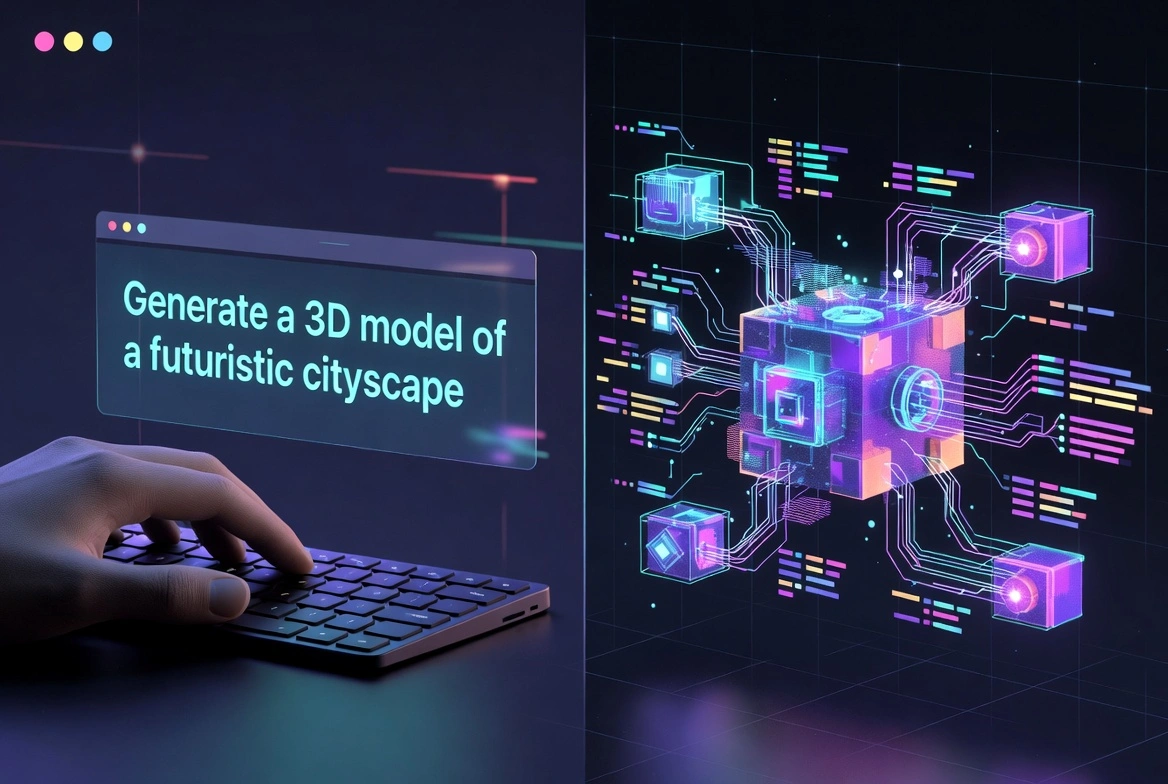
Vibe coding is a revolutionary approach to software development coined by Andrej Karpathy, co-founder of OpenAI and former AI leader at Tesla, in February 2025. The term describes a coding methodology where developers rely on large language models (LLMs) to generate working code through natural language descriptions rather than manually writing it line by line.
“Fully give in to the vibes, embrace exponentials, and forget that the code even exists.” — Andrej Karpathy, describing vibe coding
In practical terms, vibe coding means working with AI as a highly skilled assistant: you set the direction and describe what you want, and the AI handles the implementation details. Unlike traditional development where programmers write every line, vibe coders guide AI tools like Cursor, Windsurf, or Claude Code to generate, debug, and refine code at unprecedented speed.
Key Definition: Vibe Coding = Using AI and large language models to create executable code through natural language prompts, allowing developers to focus on high-level logic and creativity while AI handles implementation details. A key characteristic is that users may accept AI-generated code without fully understanding every line.
How Vibe Coding Differs from Traditional Development
| Aspect | Traditional Coding | Vibe Coding |
|---|---|---|
| Code Creation | Manual line-by-line writing | Natural language prompts to AI |
| Developer Role | Writer/Implementer | Director/Orchestrator |
| Speed | Hours to days per feature | Minutes to hours per feature |
| Skill Requirement | Deep language expertise | Problem description + review skills |
| Iteration Cycle | Write-Test-Debug-Repeat | Prompt-Review-Refine-Deploy |
2026 Vibe Coding Market Statistics
The adoption of AI-powered coding tools has accelerated dramatically, reshaping the software development landscape in just 18 months.
Key Statistics
- 92% — US Developers Use AI Coding Tools Daily
- 41% — Global Code Now AI-Generated
- 300% — Reported Increase in Coding Speed
- 40% — Enterprise Software via Vibe Coding by 2028 (Gartner prediction)
Industry Adoption Milestones
- Y Combinator Winter 2025: 25% of startup codebases were 95% AI-generated
- Cursor's parent company valuation: Grew from $2.6B (late 2024) to $29.3B (December 2025)
- “Vibe Coding” was named Collins Dictionary Word of the Year for 2025
- By 2027: Gartner predicts 80% of engineers will need to upskill for AI-augmented workflows
Enterprise Adoption Note
Large enterprises like Accenture and IBM have been using vibe coding techniques for years. Teams where only a fraction of consultants are skilled programmers leverage predefined APIs while others “vibe” their way through projects — a practice that's now becoming mainstream across all company sizes.
Pros and Cons of Vibe Coding for Business

Like any transformative technology, vibe coding offers significant advantages while introducing new challenges. Understanding both sides is crucial for making informed implementation decisions.
Pros of Vibe Coding
- Dramatic Speed Increase: AI generates code in seconds, reducing development timelines from weeks to days.
- Lower Development Costs: Faster delivery means reduced labor costs and quicker time-to-market.
- Democratized Development: Business analysts, product managers, and designers can participate in development workflows.
- Rapid Prototyping: Test concepts quickly, gather user feedback early, and pivot without major engineering bottlenecks.
- Reduced Boilerplate: AI handles repetitive code patterns, letting developers focus on unique business logic.
- 24/7 Availability: AI assistants don't need breaks, enabling round-the-clock productivity.
Cons of Vibe Coding
- Security Vulnerabilities: AI-generated code is 40% more likely to contain critical security flaws (METR study).
- Technical Debt Accumulation: Can reduce ROI by 18-29% and consume 20-40% of IT budgets in maintenance.
- Governance Challenges: Difficult to track who wrote what, when, and why — problematic for regulated industries.
- Code Quality Issues: Rapid development can lead to fragmented, undocumented, hard-to-maintain code.
- Skill Erosion: 44% observe declining fundamental programming skills among junior developers.
- Debugging Burden: 63% of developers report spending more time debugging AI code than writing equivalent code manually.
The “Vibe Coding Hangover”

In September 2025, Fast Company reported the “vibe coding hangover” phenomenon — senior software engineers citing “development hell” when working with AI-generated vibe-code. The initial speed gains can be offset by downstream maintenance challenges if proper guardrails aren't in place.
Risk Mitigation Strategies
The key to successful vibe coding implementation isn't choosing between AI and traditional development — it's knowing when to use each approach:
DO use vibe coding for:
- Prototypes
- Internal tools
- MVPs
- Frontend components
- Boilerplate code
- Documentation
DON'T use vibe coding for:
- Core algorithms
- Security-sensitive components
- Financial calculation logic
- Compliance-critical systems
Top Vibe Coding Tools in 2026
The AI code editor market has matured rapidly, with several platforms emerging as industry leaders.
Cursor — The Developer's Choice
For 90% of developers in 2026, Cursor remains the best tool for vibe coding. Its “Composer” workflow is unmatched for rapid iteration — hit Cmd+I, describe a complex change affecting multiple files, and Cursor figures out dependencies, applies edits, and fixes lint errors automatically.
Best For: Professional developers, complex multi-file changes, teams with existing VS Code workflows.
Pricing: $20/mo Pro (includes Claude 3.5 Sonnet & GPT-4o)
Windsurf — The Co-Pilot Experience
Windsurf (formerly Codeium) excels at understanding your project's “vibe.” Its agentic Cascade feature proactively watches your actions in real-time, suggesting related changes across the entire codebase. It feels snappier than Cursor on large repositories.
Best For: Teams wanting proactive AI assistance, large codebases, developers who prefer guided experiences.
Pricing: $15/mo Pro | $30/user Teams | $60/user Enterprise
Replit Agent — Zero to Deployed
Replit has pivoted hard to AI with Replit Agent. Type “Build me a todo app with dark mode” and it spins up the environment, installs dependencies, writes the code, and deploys to a live URL. It was the fastest in testing — coding an app in under 5 minutes.
Best For: Beginners, non-technical founders, rapid prototyping, learning to code, quick MVPs.
Pricing: Free tier available | Pro plans from $25/mo
Claude Code — Terminal-Native Power
Claude Code by Anthropic is a terminal-native AI assistant for command-line workflows. It handles large codebases and documents, generates, debugs, and explains code in natural language. Its focus on safety and context awareness makes it reliable for long-form tasks.
Best For: Backend developers, DevOps engineers, teams prioritizing safety, complex debugging sessions.
Pricing: Usage-based API pricing
Tool Comparison Matrix
| Feature | Cursor | Windsurf | Replit | Claude Code |
|---|---|---|---|---|
| Multi-file editing | Excellent | Excellent | Good | Excellent |
| Deployment included | No | No | Yes | No |
| Proactive suggestions | Good | Excellent | Good | Moderate |
| Enterprise security | Yes | Yes | Limited | Yes |
| Best for beginners | Moderate | Good | Excellent | Moderate |
How IT Companies Help Businesses Leverage Vibe Coding
While vibe coding tools are increasingly accessible, successful enterprise implementation requires strategic guidance.
1. Strategic Assessment & Readiness Evaluation
Not every project is suitable for vibe coding. IT consultants help businesses identify which initiatives will benefit most from AI-augmented development:
- Audit existing development workflows to find vibe coding opportunities
- Assess team capabilities and upskilling requirements
- Evaluate security and compliance requirements that may limit AI code generation
- Identify quick-win projects for initial implementation
2. Tool Selection & Integration
With dozens of AI coding platforms available, choosing the right stack is critical. IT partners help businesses:
- Evaluate tools against specific business requirements (Cursor vs. Windsurf vs. Replit)
- Integrate AI tools with existing CI/CD pipelines and version control
- Configure enterprise security settings and data governance policies
- Establish prompt libraries and best practices for consistent results
3. Governance & Quality Frameworks
The biggest risk of vibe coding isn't the AI — it's ungoverned AI. IT consultants implement frameworks to maintain code quality:
Enterprise Vibe Coding Governance Framework:
- Code Review Protocols: All AI-generated code reviewed by senior developers
- Security Scanning: Automated vulnerability scanning before merge
- Documentation Requirements: AI-generated code must include reasoning/prompts
- Audit Trails: Track who prompted what, when, and why
- No-Vibe Zones: Define components where AI generation is prohibited
4. Team Upskilling & Change Management
Gartner predicts 80% of engineers will need to upskill by 2027 as generative AI reshapes workflows. IT partners provide:
- Training programs on effective AI prompting techniques
- Workshops on reviewing and debugging AI-generated code
- Change management support for development teams transitioning to AI-augmented workflows
- Metrics and KPIs to measure productivity improvements
5. Hybrid Development Models
The most successful implementations use vibe coding strategically rather than universally.
Best Practice: Treat AI as a Co-Pilot, Not a Replacement. Successful vibe coding implementations treat AI as a co-pilot instead of replacing engineering discipline. Implement policies, reviews, and logging systems. Engage compliance and security teams early. Document reasoning, edits, and prompts. Never vibe code the heart of your application — core algorithms, security-sensitive components, or financial calculation logic.
6. Technical Debt Prevention
Forrester estimates 75% of technology decision-makers will face moderate to severe technical debt by 2026. IT partners implement preventive measures:
- Regular code audits specifically for AI-generated sections
- Refactoring schedules to consolidate AI-generated patterns
- Documentation automation to capture AI code intent
- Technical debt tracking dashboards with AI-specific metrics
Vibe Coding Implementation Roadmap
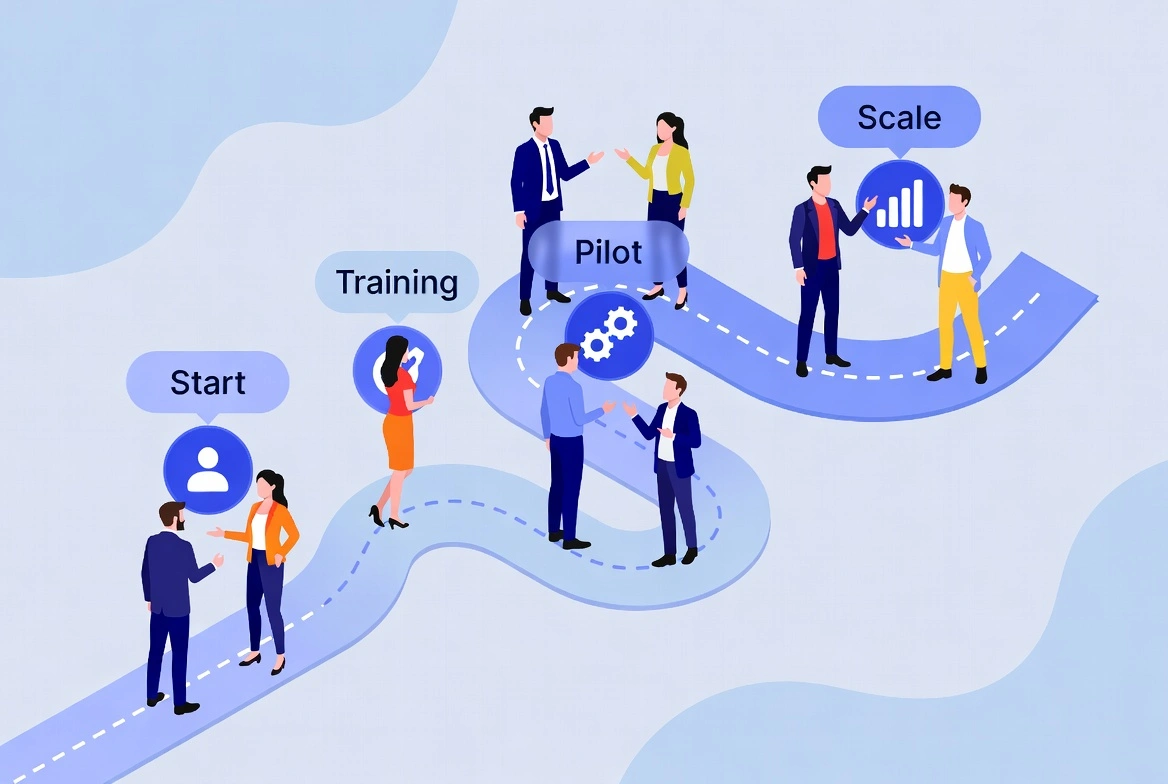
For businesses ready to adopt vibe coding, here's a phased implementation approach that minimizes risk while maximizing learning.
Step 1: Start with Internal Tools (Weeks 1-4)
Pick one internal tool or simple corporate application — not your mission-critical system. This gives your team time to understand how AI works without risking core operations. Examples: admin dashboards, internal reporting tools, developer utilities.
Step 2: Establish Governance Framework (Weeks 2-4)
Before scaling, define policies: Which code requires human review? What's the approval process? How do you track AI-generated vs. human-written code? Engage security and compliance teams early.
Step 3: Train Your Team (Weeks 3-6)
Vibe coding requires new skills: prompt engineering, AI output review, debugging AI code. Invest in training before expecting productivity gains. Focus on teaching developers to verify, not just accept, AI suggestions.
Step 4: Pilot Customer-Facing Project (Weeks 6-10)
With lessons learned, apply vibe coding to a customer-facing project with lower risk tolerance. Implement full code review, security scanning, and documentation requirements. Measure velocity improvements and quality metrics.
Step 5: Scale & Optimize (Ongoing)
Roll out to additional projects based on success criteria. Build prompt libraries, establish team-specific best practices, and continuously refine governance based on real-world experience.
The Future of Vibe Coding: 2026 and Beyond
Self-Healing Software
The next frontier for vibe coding is self-healing software. Experts predict that the next generation of tools will not just build apps but actively monitor them in production — fixing bugs and optimizing performance in real-time without human intervention.
Agentic Development
Tools like Cursor, Windsurf, and Replit Agent have created an “AgenticOS” — a layer where AI has access to a terminal, browser, and deployment key. In 2026, AI coding tools are not just assistants; they're collaborators that allow developers to focus on high-level logic while AI handles implementation.
The Expanding Role of Developers
What happened over 2025 is that the definition of a “developer” expanded to include people who rely on prompting rather than programming. By 2026, business analysts, product managers, and domain experts are increasingly contributing to codebases through AI intermediation.
2026 Predictions
If 2025 was the prelude, 2026 marks the opening act of AI's economic integration. The technology is ready to enter businesses as genuine workforce augmentation, not just productivity tools. In 2026, vibe coding and agentic orchestration have become foundational to how software is built.
Conclusion: Is Vibe Coding Right for Your Business?
Vibe coding represents a fundamental shift in software development — one that offers tremendous opportunities for businesses willing to embrace it strategically. The statistics are compelling: 300% increases in coding speed, 41% of global code now AI-generated, and a rapidly maturing ecosystem of enterprise-grade tools.
However, success requires more than just adopting new tools. Businesses need:
- Strategic assessment to identify the right use cases
- Governance frameworks to manage security and quality risks
- Team upskilling to maximize AI collaboration effectiveness
- Expert guidance to avoid the “vibe coding hangover”
The question isn't whether to adopt vibe coding — it's how to adopt it responsibly. With the right implementation partner and framework, businesses can capture the productivity benefits while avoiding the pitfalls that have trapped early adopters.
Tizbi — 28+ years of software development experience, helping businesses navigate emerging technologies including AI-powered development, legacy modernization, and digital transformation. Based in Raleigh, NC.