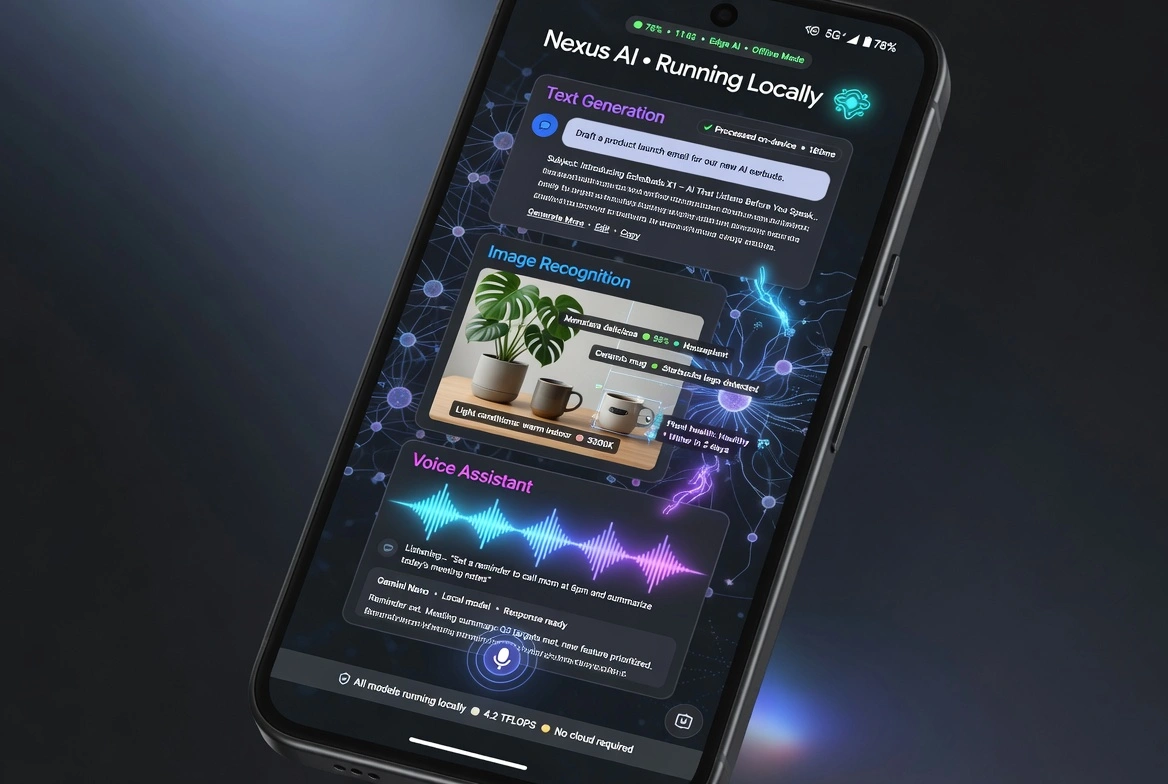
Key Takeaway: Android app development in 2026 is a fundamentally different discipline than it was two years ago. On-device AI through Gemini Nano and ML Kit GenAI APIs means your Android app can run AI features without a cloud connection, without per-query costs, and without sending user data off the device. Tizbi® builds Android applications with these capabilities for businesses across healthcare, finance, retail, and field operations.
Table of Contents
- What Changed in Android Development This Year?
- Rise of On-Device AI
- Gemini Nano and AICore
- ML Kit GenAI APIs Explained
- Key Benefits: Speed, Privacy, Cost
- Why On-Device AI Matters for Business Applications
- Offline-First Capabilities
- Real-World Use Cases
- Healthcare
- Field Service
- Finance
- Retail
- Logistics & Warehousing
- How Kotlin and Jetpack Compose Are Transforming Development
- Kotlin as the Standard
- Benefits of Jetpack Compose
- Productivity and Cost Improvements
- Native vs. Cross-Platform: What Should You Build?
- Native Android (Kotlin + Compose)
- Kotlin Multiplatform (KMP)
- Flutter
- React Native
- Recommendation by Use Case
- What Does an AI-Powered Android App Cost?
- Key Cost Drivers
- Cost-Saving Factors
- Development Timeline Trends
- Maintenance Costs
- How Tizbi Builds AI-Powered Android Apps
- Discovery & AI Assessment
- Architecture & Prototyping
- Core Development
- AI Training & Optimization
- Launch & Iteration
- What AI Features Can You Add to an Existing Android App?
- Smart Search
- Image Recognition
- Predictive Analytics
- Conversational AI
- Voice Interfaces
- Document Processing
- Which Industries Benefit Most from AI-Powered Android Apps?
- Healthcare & Life Sciences
- Financial Services
- Manufacturing & Logistics
- Construction & Real Estate
- Retail & E-Commerce
- What Should You Ask Before Hiring an Android Development Company?
- Key Questions to Evaluate Expertise
- AI Capability Indicators
- Experience & Portfolio Validation
- Frequently Asked Questions (FAQ)
What Changed in Android Development This Year?
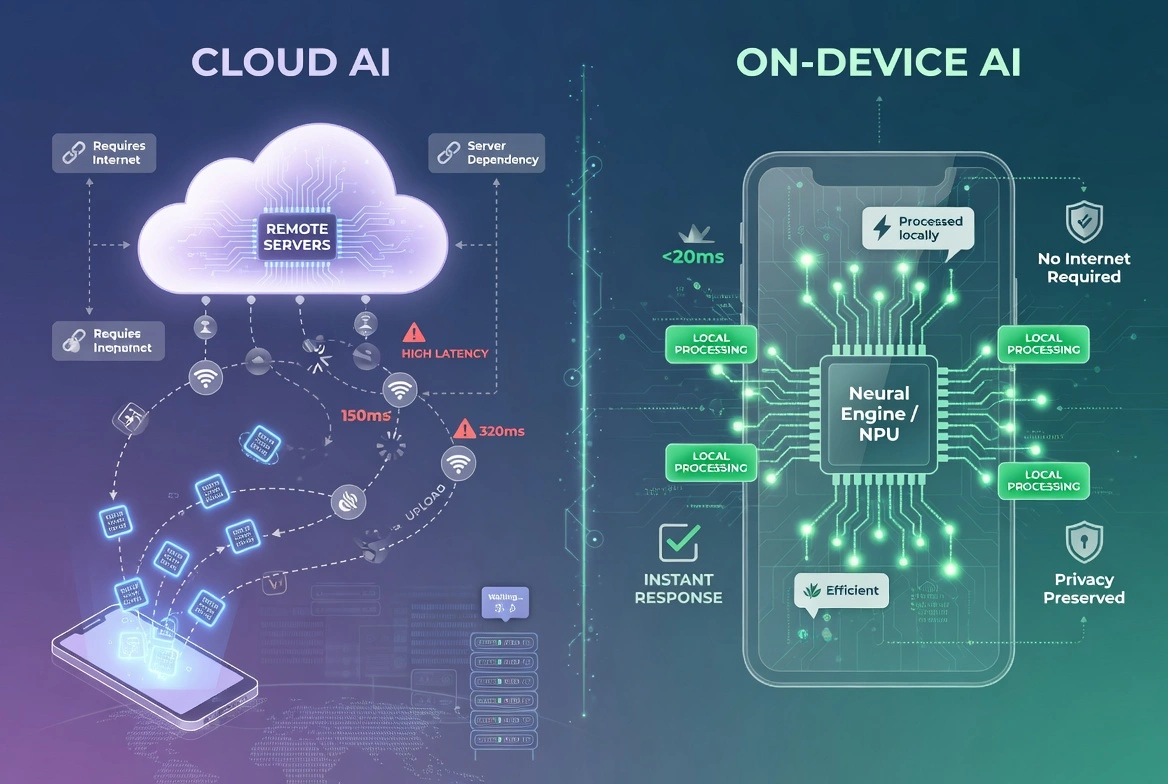
The short answer: AI moved onto the phone.
Google's Gemini Nano now runs directly on Android devices through the AICore system service. Not through an API call to a distant server. On the device itself. Qualcomm Snapdragon and MediaTek Dimensity processors have dedicated neural processing units that handle AI workloads the way GPUs handle graphics, as built-in hardware, not a bolt-on.
This isn't a gimmick. Gemini Nano 2.0 is a multimodal model. It processes text, images, and speech locally. The ML Kit GenAI APIs give developers ready-made tools for summarization, proofreading, rewriting, image description, and speech recognition, all running on-device with zero network dependency.
What does that mean for your business? Three things:
- Speed. No round-trip to a cloud server. AI responses in milliseconds.
- Privacy. Sensitive data never leaves the device. Critical for healthcare, finance, legal.
- Cost. Zero per-query charges. Run AI features a million times a day and your cloud bill doesn't change.
For businesses building Android apps in 2026, ignoring on-device AI is like ignoring touchscreens in 2010. You can do it. But you'll regret it.
Why Does On-Device AI Matter for Business Applications?
Because your users aren't always connected to the internet.
A field service technician inside a warehouse. A sales rep in a rural client's office. A healthcare worker in a facility with spotty Wi-Fi. A construction foreman on a job site. These are real scenarios where cloud-dependent AI simply fails.
On-device AI works everywhere. Offline-first. Always available.
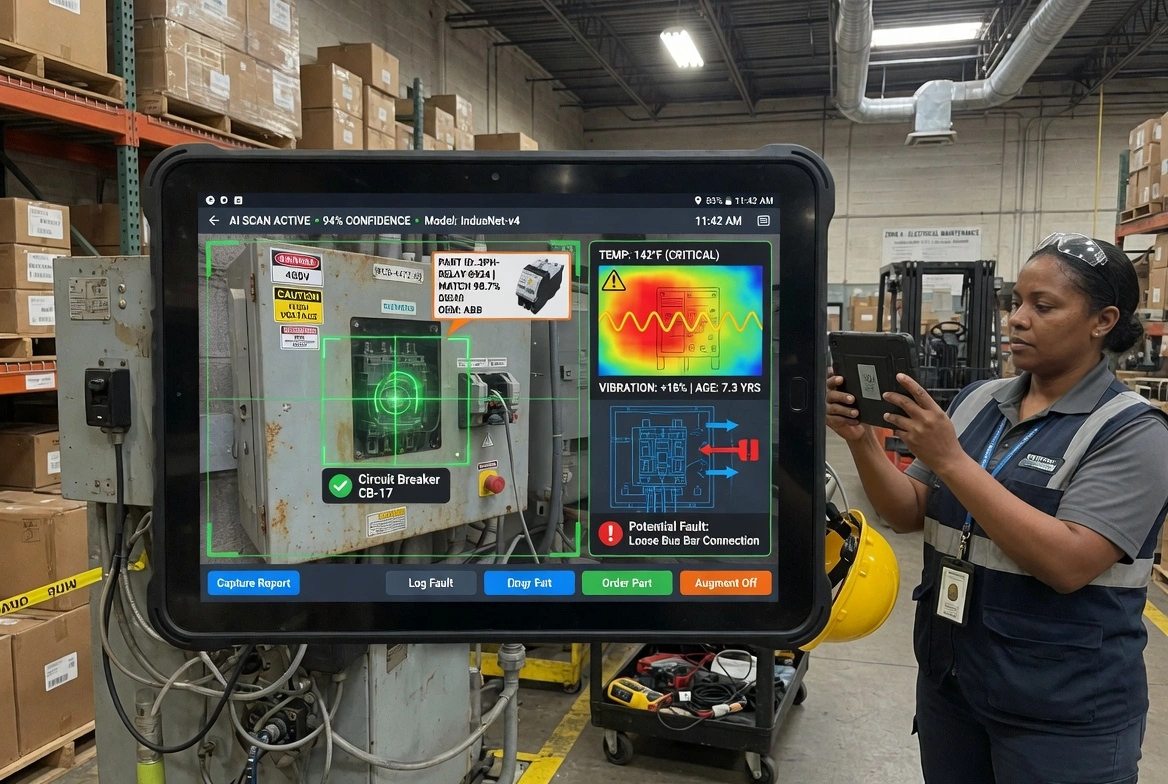
Here's what businesses are building right now:
Healthcare
Android tablets running diagnostic AI that analyzes medical images on-device, with zero data leaving the hospital network. Healthcare systems using on-device AI report an average 5:1 ROI. HIPAA compliance gets simpler when patient data never touches a third-party server.
Field Service
Technicians pointing their phone camera at equipment and getting instant AI-powered diagnostics. Parts identification, maintenance instructions, anomaly detection, all processed by Gemini Nano on the device. No connectivity required.
Finance
On-device fraud detection that flags suspicious transactions in milliseconds. Your banking app doesn't need to call home to determine if a transaction looks wrong. The AI model runs locally, decisions happen instantly, and sensitive financial data stays on the user's device.
Retail
Real-time product recommendations, visual search (“take a photo of what you want”), and personalized promotions, all powered by on-device AI. Retailers implementing these features report higher conversion rates and measurably lower cart abandonment.
Logistics and Warehousing
Barcode scanning with AI-powered inventory management. Warehouse workers scan, and the app predicts reorder needs, flags misplacements, and optimizes pick routes, all without depending on the warehouse Wi-Fi that drops out three times a shift.
How Has Kotlin and Jetpack Compose Changed Android Development?
Kotlin isn't optional anymore. It's Google's official language for Android, and every modern library, API, and tool is Kotlin-first.
But here's what really changed the game: Jetpack Compose. Over 60% of the top 1,000 apps on the Play Store now use it. Airbnb, SoundCloud, Dropbox, Lyft, Pinterest, they've all moved to Compose. The productivity gains? Measurable.
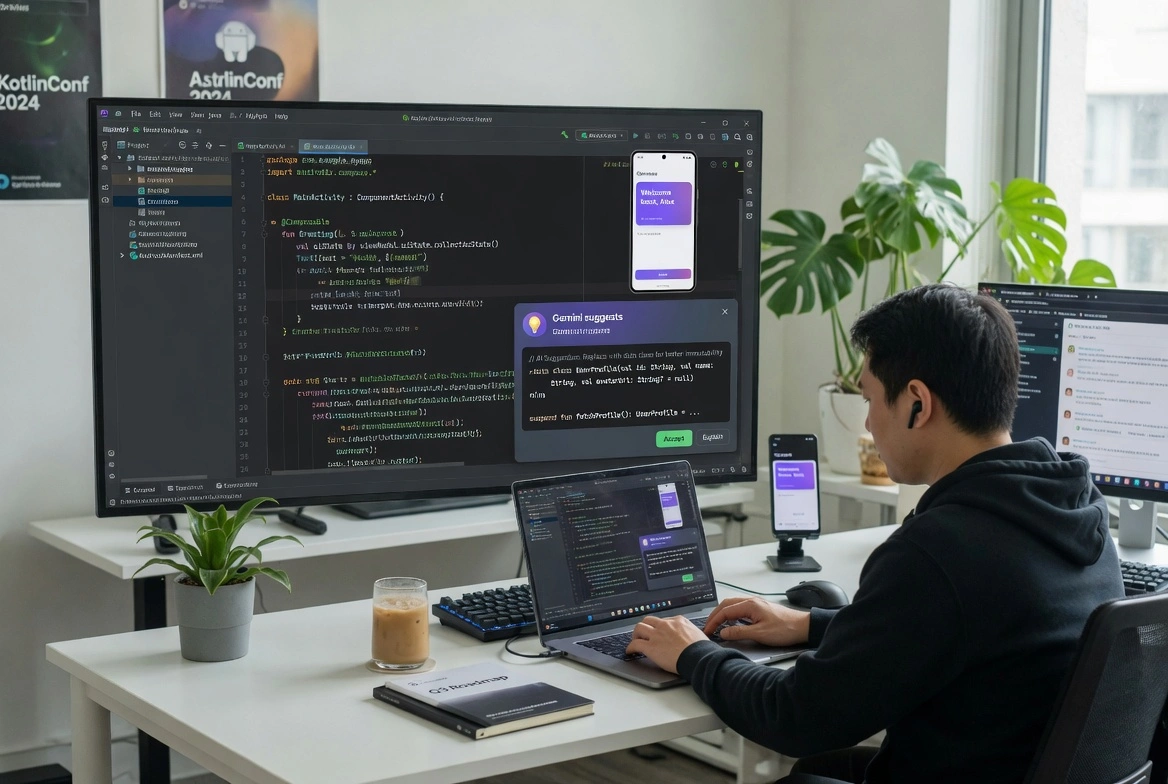
- 30-40% less UI code compared to the old View-based system
- 40% faster screen rewrites, which means faster testing and release cycles
- Declarative UI that's easier to maintain and less prone to bugs
For businesses, that means faster development and lower costs. A feature that took three weeks to build with XML layouts? Under two weeks with Compose. Multiply that across an entire app, and you're looking at months saved.
Pair Compose with on-device AI, and Android developers can build intelligent interfaces that would have taken twice as long in 2024.
Should You Build Native Android, Cross-Platform, or Both?
We hear this one constantly. The honest answer depends on your audience, your budget, and how deep the AI goes.
| Framework | Best For | AI Capability | Market Share / Adoption |
|---|---|---|---|
| Native Kotlin + Jetpack Compose | Deep hardware access, regulated industries, max AI performance | Full Gemini Nano + AICore access | 72% global Android market share |
| Kotlin Multiplatform (KMP) | Android + iOS from one codebase, complex business logic | Native AI per platform, shared logic | 7% to 23% adoption in 18 months |
| Flutter | Speed to market, UI-heavy consumer apps | Via platform channels (extra setup) | 46% cross-platform market share |
| React Native | Teams with React/JS expertise, e-commerce | Via native modules | Expo ecosystem growing |
Our recommendation: for enterprise Android apps with AI features, go native Kotlin. For cross-platform with heavy business logic, go KMP. For consumer apps where design speed matters, go Flutter. Skip hybrid (Cordova, Ionic) entirely in 2026.
What Does an AI-Powered Android App Actually Cost?
Four things drive the number: complexity, how deep the AI goes, compliance requirements, and timeline. Here's how to think about it.
What Drives Cost Up
On-device AI integration, offline-first architecture, compliance (HIPAA, SOC 2, PCI-DSS), multi-platform support, custom ML model training, real-time data sync, IoT device connectivity.
What Keeps Cost Down
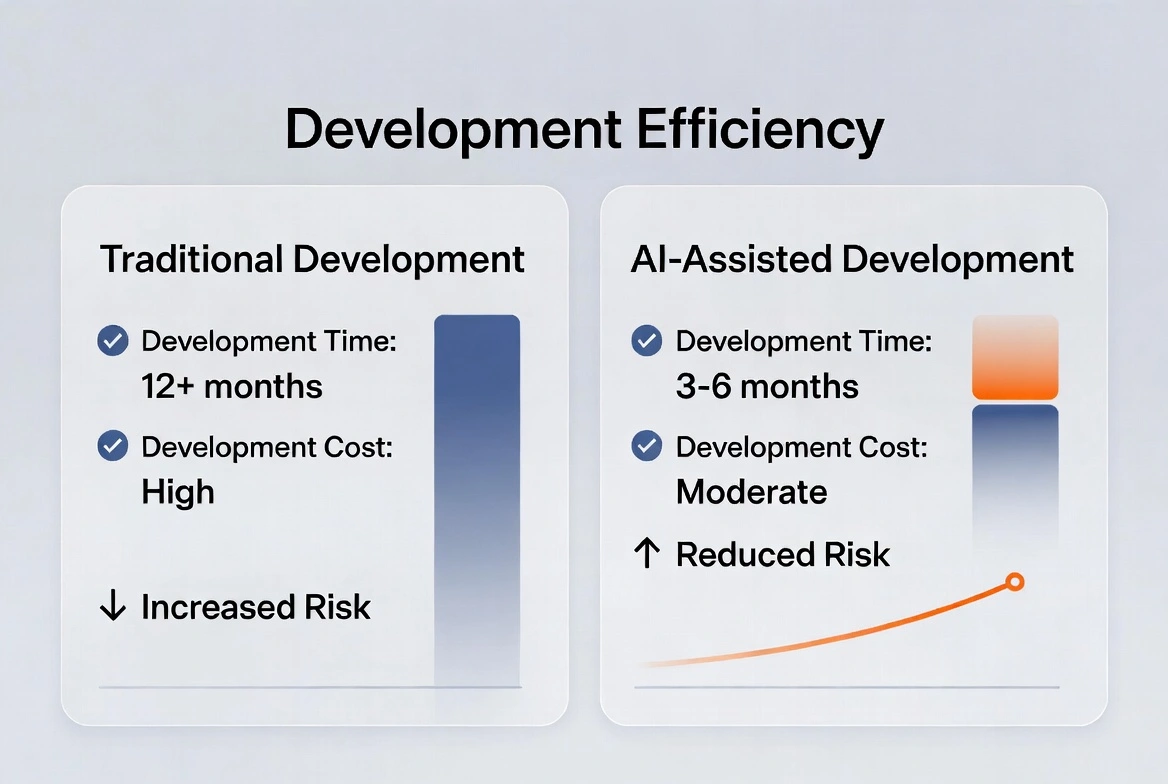
AI-assisted development tools (Copilot, Cursor) cut coding time by 30-50%. Pre-built ML Kit GenAI APIs replace months of custom model work. Jetpack Compose cuts UI code by 40%. Rapid prototyping validates ideas in 2-4 weeks before full commitment.
Here's what nobody was predicting two years ago: AI tools have compressed development timelines across the board. A project that took 8 months in 2024 often ships in 4-5 months now. An experienced team working in Kotlin and Compose, with AI-assisted development in the workflow, simply moves faster.
And the on-device AI components? More accessible than most people expect. Gemini Nano and ML Kit GenAI APIs are free. No per-query cloud costs. Your investment goes into integration, testing, and making it work well for your specific users. After launch, budget 15-25% of initial development annually for maintenance: OS updates, security patches, model retraining, Play Store compliance.
For a realistic estimate based on your specific project, start with a discovery session. We scope the AI features first and build out from there.
How Is Tizbi Building AI-Powered Android Apps?
We've been building mobile apps since 1998, before Android existed. Palm OS, Windows Mobile, BlackBerry, we shipped on all of them. Since Android launched, we've delivered apps for 100K+ user bases and apps for 20-person warehouse crews. The scale is different, but the engineering rigor is the same.
Here's what our Android development process looks like in 2026:
Week 1-2: Discovery and AI Assessment
Before writing any code, we identify where AI creates real value in your app. Not every feature needs AI. The ones that do need the right approach: on-device vs. cloud, real-time vs. batch, supervised vs. unsupervised. We map your use cases to specific ML Kit GenAI APIs and custom models.
Week 3-4: Architecture and Prototype
Kotlin-first architecture with Jetpack Compose UI. We set up the AI pipeline early: Gemini Nano integration, model selection, data flow design. You see a working prototype with real AI features, on a real Android device, before we build the full app.
Month 2-4: Core Development
Two-week sprints with demos every other Thursday. Full-stack: Kotlin backend, Compose frontend, AI layer, API integrations, offline-first data sync. Our QA team tests every sprint, not just at the end.
Month 4-5: AI Training and Optimization
Fine-tuning on-device models with your data. Performance optimization for target devices. Battery impact testing (on-device AI uses the neural processor, not the main CPU, so battery drain is minimal when done right). Security audit for data handling.
Month 5-6: Launch and Iteration
Play Store deployment, staged rollout, performance monitoring. Post-launch: we track AI accuracy metrics, user engagement with AI features, and model performance over time.
What AI Features Can You Add to an Existing Android App?
Good news: you don't need to rebuild your app from scratch to add AI.
If you've got an existing Android app, these are features we can bolt on without a full rewrite:
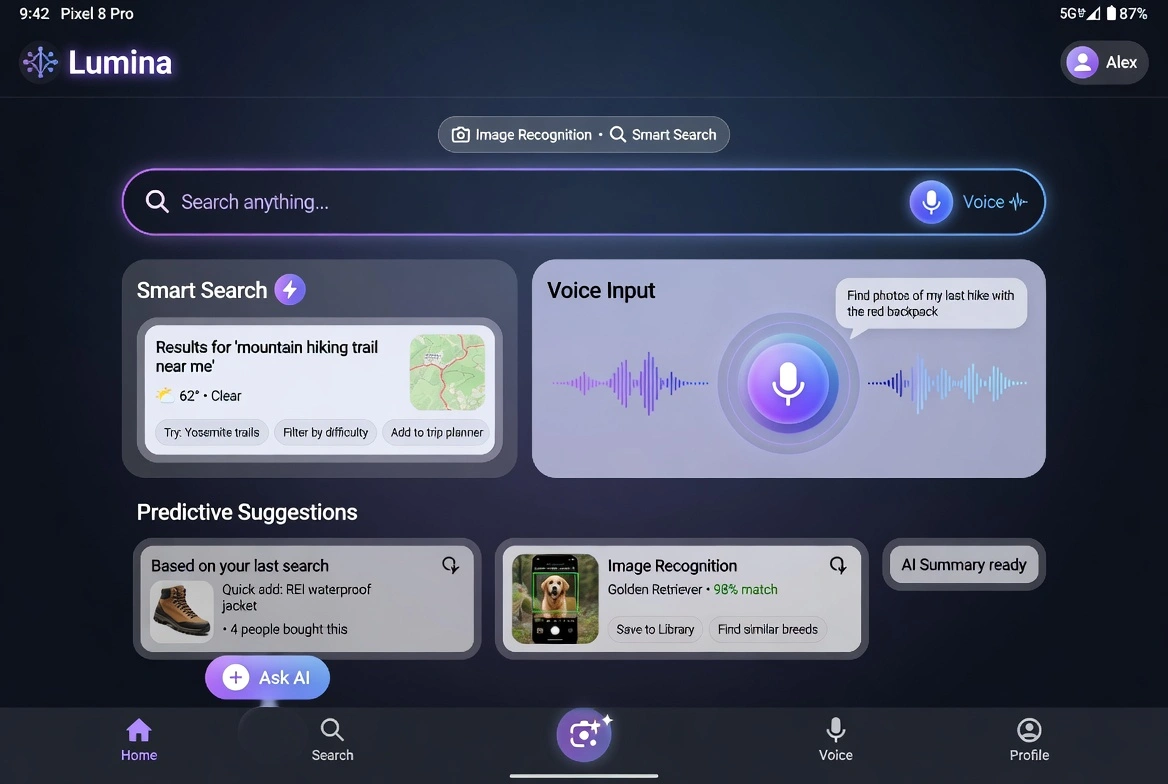
Smart search. Replace basic keyword search with AI-powered semantic search that understands what users mean, not just what they type.
Image recognition. Point the camera at a product, document, or piece of equipment and get instant identification, classification, or data extraction.
Predictive features. Forecast inventory needs, predict user behavior, flag anomalies before they become problems. All based on your existing data.
Conversational AI. In-app chat that actually understands context. Not a decision tree. An AI agent that pulls from your knowledge base and handles multi-turn conversations.
Voice interface. ML Kit's GenAI Speech Recognition API runs on-device. No cloud latency. Useful for hands-free field applications.
Document processing. Auto-summarize reports, extract key data from invoices, generate descriptions for images in your catalog. All on-device.
Typical timeline: 4-8 weeks for a single feature, 3-6 months for a full AI overhaul. We always start with an assessment because the biggest win isn't always the most obvious one.
Which Industries Benefit Most from AI-Powered Android Apps?
Some industries see bigger returns than others. Here's where the ROI is clearest:
Healthcare and Life Sciences. On-device diagnostics, patient monitoring, clinical trial data collection. The privacy advantage is massive: HIPAA compliance is simpler when data never leaves the device. We're already seeing RTP pharma companies and healthcare networks in the Triangle move to this model.
Financial Services. Fraud detection, risk assessment, personalized financial advice, running locally. Speed matters here: millisecond response times for transaction screening vs. seconds when you're waiting on a cloud round-trip.
Manufacturing and Logistics. Quality inspection with computer vision, predictive maintenance, route optimization for delivery fleets. These are environments where Wi-Fi is unreliable at best: factory floors, warehouses, rural delivery routes.
Construction and Real Estate. AR-powered site inspections, AI document processing for permits and plans, safety monitoring with computer vision. On a job site, “check your internet connection” isn't an acceptable error message.
Retail and E-Commerce. Visual search, personalized recommendations, inventory management, customer behavior analytics. The conversion rate improvements from on-device AI features are measurable, and they compound.
What Should You Ask Before Hiring an Android Development Company?
Not all Android teams are equal. In 2026, the dividing line is AI capability. Here's how to tell who actually knows what they're doing.
Ask these questions:
- “Show me an AI feature you shipped on-device, not in the cloud.” If they can't, they're not building modern Android apps.
- “What's your experience with Gemini Nano and ML Kit GenAI?” These are the standard tools. A team that hasn't worked with them is behind.
- “Do you build with Jetpack Compose?” If they're still writing XML layouts, they're working with 2020 tools.
- “How do you handle offline-first architecture?” Enterprise apps need to work without connectivity. This is a non-trivial engineering challenge.
- “What's your process for AI feature ROI assessment?” Good teams evaluate where AI adds value before building. Great teams measure it after launch.
- “Can you show me apps in production with real users?” Demos and prototypes are easy. Production apps at scale reveal the real capability.
Tizbi has 28 years of continuous operation and 400+ projects behind us. Our dedicated AI practice (All-In AI) has its own team, not a couple of developers who “also do AI.” We build the AI layer into the architecture from day one.
Frequently Asked Questions
How long does it take to build a custom Android app with AI features?
Timelines depend on complexity and AI depth. AI-assisted development tools have compressed build cycles significantly since 2024. We deliver working prototypes within 2-4 weeks so you can validate the concept before committing to full development. Contact us for a scoped estimate.
Can I add AI to my existing Android app without rebuilding it?
Yes. We specialize in enhancing existing apps with AI capabilities. Common additions include on-device image recognition, predictive features, conversational AI, voice interfaces, and smart search. Typical timeline: 4-8 weeks for a single AI feature.
What is Gemini Nano and why does it matter for business apps?
Gemini Nano is Google's on-device AI model that runs directly on Android phones through the AICore system service. It matters because your app's AI features work offline, respond in milliseconds, cost nothing per query, and keep sensitive data on the device. It supports text, image, and speech processing.
Is native Android development still worth it vs. cross-platform?
For apps requiring deep AI integration, hardware access, or maximum performance, native Android (Kotlin + Jetpack Compose) remains the best choice. For cross-platform needs, Kotlin Multiplatform shares business logic while keeping native UI. Flutter is strong for UI-heavy consumer apps. Choose based on your priorities.
How much does Android app maintenance cost after launch?
Plan for 15-25% of the initial development cost annually. This covers OS compatibility updates (new Android versions release yearly), security patches, performance optimization, feature enhancements, and Play Store policy compliance. For AI-powered apps, add model retraining and accuracy monitoring.
What industries benefit most from on-device AI in Android apps?
Healthcare (HIPAA-compliant diagnostics), finance (real-time fraud detection), manufacturing (quality inspection), logistics (offline route optimization), and retail (personalized recommendations) see the highest ROI. Any industry where users need AI features without reliable internet benefits from on-device processing.
Does Tizbi offer Android app development in Raleigh?
Yes. Tizbi is headquartered in Raleigh, NC at 3915 Beryl Rd, Suite 130. Our Android development team builds native Kotlin and cross-platform apps with built-in AI capabilities. We offer a Rapid AI Prototype program: a working prototype on real Android devices within 2-4 weeks. Call (919) 373-5095 or visit tizbi.com/contactus.
How do on-device AI apps handle data privacy?
On-device AI processes everything locally on the phone's neural processor. No data is sent to external servers for AI processing. This makes compliance with HIPAA, SOC 2, GDPR, and PCI-DSS significantly simpler. The AI model runs in a sandboxed environment managed by Android's AICore service.

